Islands Farmers Deepen Their Understanding Of Water Quality Risks
“The runoff risk assessment highlighted a few things to me,” Michael Trayers says.
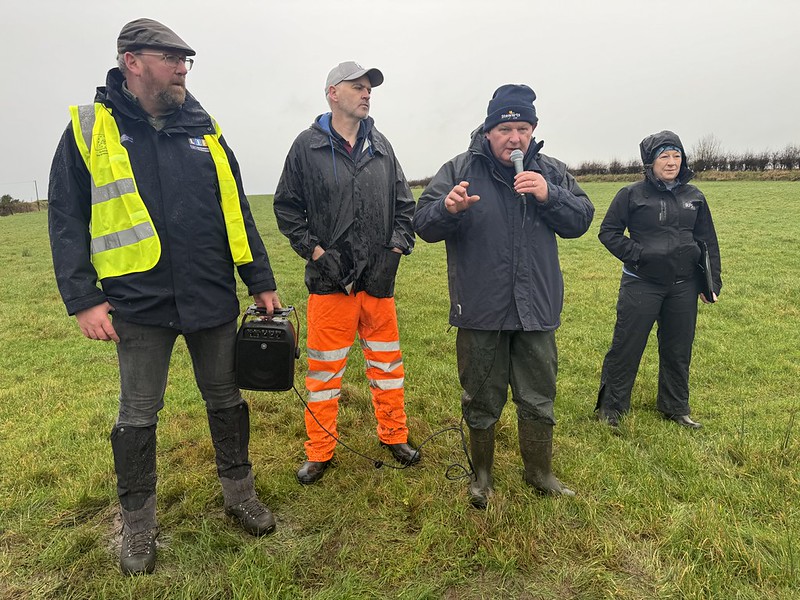
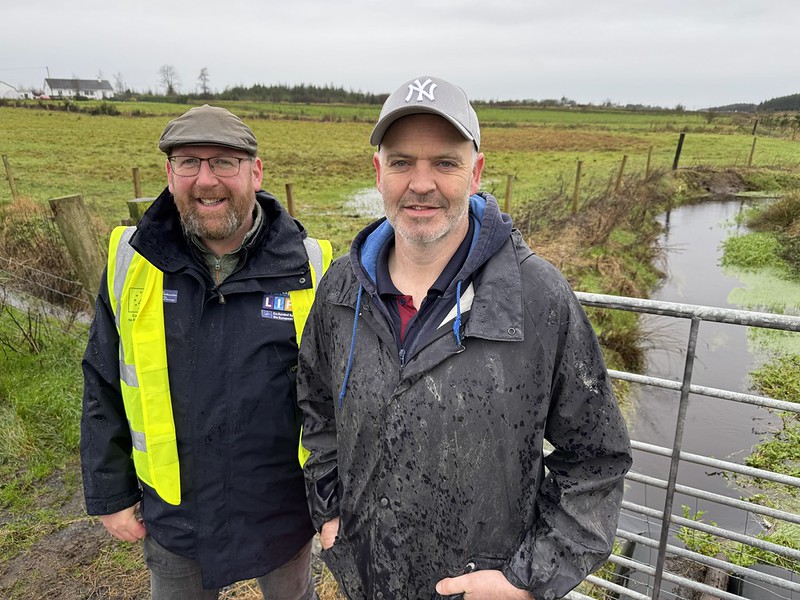
Michael is standing on his sheep farm in Co. Galway, overlooking the Springfield river. He is chatting to local farmers about water quality risks on his farm. He’s up for making some changes.
“The fencing over there is right up against the river bank. I’d have no problem fencing outside that and putting in native trees. I’d agree with that. I think it will help the banks. Anything that will improve the quality of the water. It’s deteriorating around here. We’re all aware of that.”
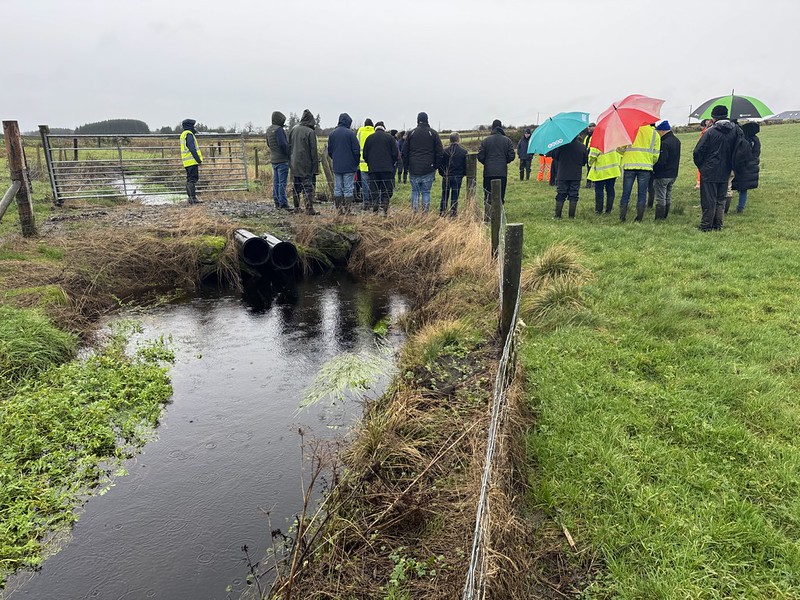
Michael is one of 75 farmers in the Islands sub-catchment who attended Runoff Risk Assessment training in December 2025. Waters of LIFE are helping farmers use the source-pathway-receptor model to identify water quality risks on their farm.
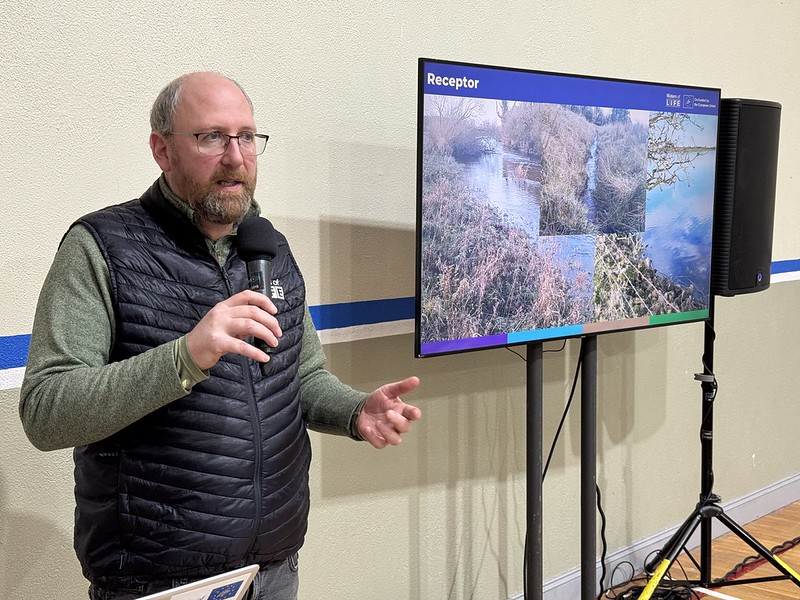
Runoff Risk Assessment (RRA) is a whole-farm assessment to identify sources of pollutants and flow pathways. Any pathway between a pollutant source and a stream/river (receptor) is a threat to water quality.
A Waters of LIFE approved advisor undertakes a desk study and site visit on behalf of the farmer to determine risk. Both are paid directly by Waters of LIFE for the job.
The runoff risk assessment helps farmers and their advisors make evidence based decisions on where actions for water quality can be funded.
The output is a map with points of interest and a list of proposed actions that help to control sources or break pathways. These supporting actions are screened and approved by Waters of LIFE. The programme is co-funded by the EU and led by the Department of Housing, Local Government and Heritage.
Click here for a guide to runoff risk assessment
Noel Feeney is Michael’s advisor. He proposed 23 supporting actions for water quality on Michael’s farm with a particular focus on the river flowing through it. Other parts of the farm required no intervention.
“That’s a clean yard,” Noel tells the training group. “There are no big areas of concrete, and in general the water that’s flowing through here is not picking up any contaminants or sediments.”
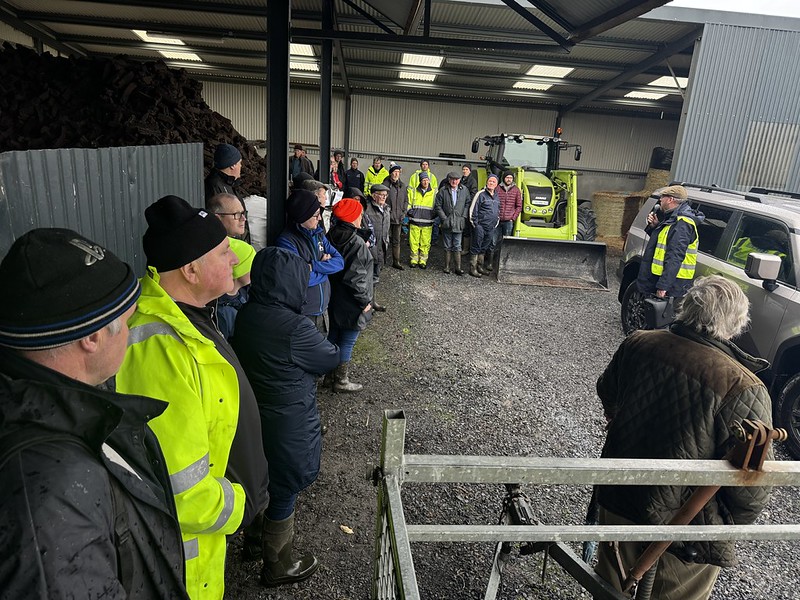
Farmers can see for themselves how supporting actions work. But they also understand the theory behind it. Before they boarded the bus to Michael’s farm, they worked in small groups with Catchment Scientist John Kelly on their own Runoff Risk Exercise.
Click here to view PDF of Runoff Risk Assessment training presentation.
Participants were given aerial imagery of a small farm holding in the Islands with details of flow pathway, soil type and pollution impact potential. The Islands catchment is in a low-lying area with mainly limestone bedrock. Soil type is mainly peat and poorly drained with some well drained areas.
Farmers were asked to identify their own points of interest and then discuss effective actions using the source-pathway-receptor model. Points of interest for runoff risk include potential sources of pollutants:
- Poaching/erosion
- Areas used for silage bale storage etc
Significant pathways for pollutants are also points of interest:
- Farm trackways
- Drainage ditches
- In-field flow pathways
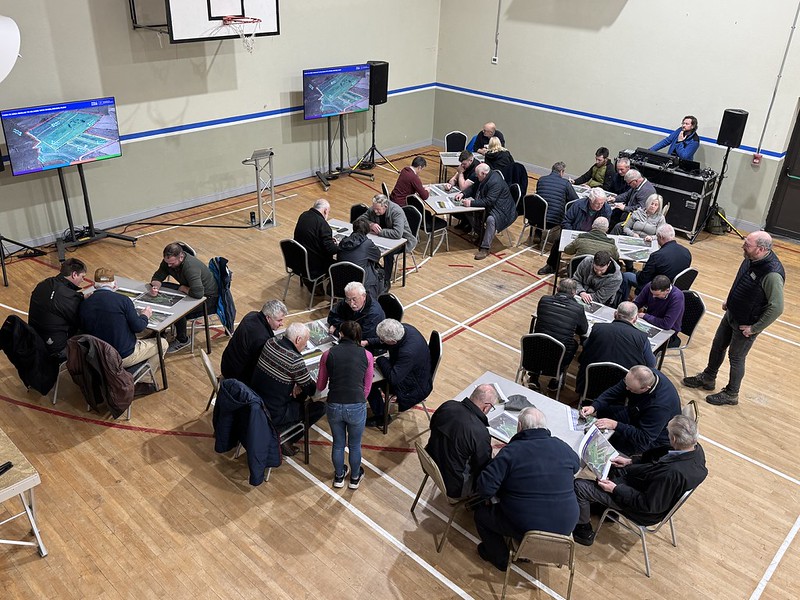
The groups quickly spotted the drains as points of interest.
With the assessment complete, attention turns to selecting actions to be funded by the programme. There are five main categories:
- Farm Infrastructure: These are mainly fencing and gateway measures to keep livestock away from rivers.
- Green Infrastructure: These are nature based solutions such as planting trees and hedgerows or installing bars, bunds or traps to break pathways. (Nature Based Solutions)
- Water Crossing: Keep livestock away from rivers while maintaining access.
- Water Provision: Ensure livestock access to drinking water while keeping them away from water bodies.
- Other: Bespoke actions decided on a case-by-case basis in conjunction with the farmer.
Supporting actions are most effective when stacked. The groups all agreed that fencing measures were needed to restrict livestock access and protect riverbanks. That was to be supported by provision of water using water troughs and a solar pump. Vegetated bunds in the drains would help prevent sediment and nutrients reaching the river.
Click here for Supporting Action Payment Rates
John Kelly also gave them an updated on local water quality.2 of the 7 water bodies in the Islands sub-catchment (Pollynoon_10 and Islands_30) had their water quality status downgraded from good to moderate in the most recent EPA report. Ireland has a legal obligation under the Water Framework Directive to ensure all water bodies have good status.
Back at the farm, Michael Trayers was positive about the funded actions identified.
“I don’t mind losing the bit of ground,” he says. “If there’s anything else that I can do, I’m open to it.”
“I replaced older fencing but I did put it back in the existing place. If I was to do it now, I’d be keeping it back a bit more but we learn these things as we go along.”
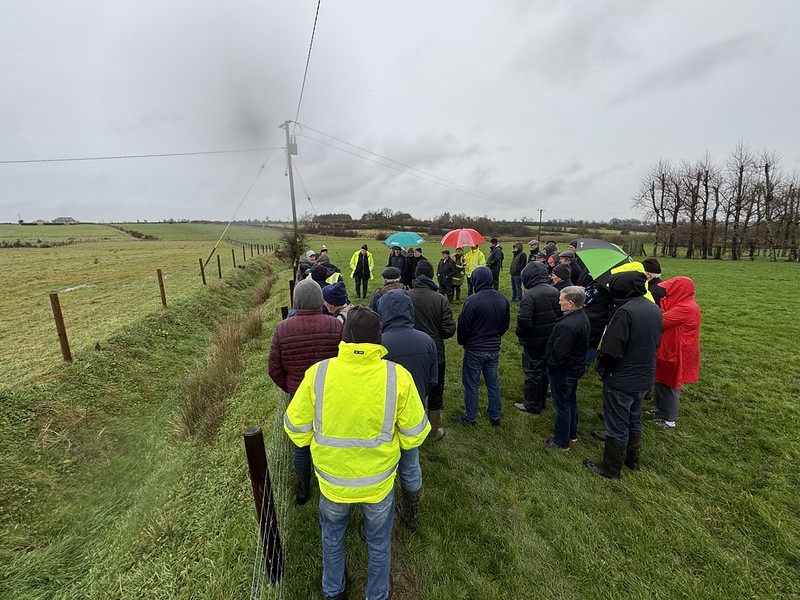
“The training that ye are getting is going to help ye to understand the situation as regards phosphorous, nitrogen and the different ways sediment can escape.
You’re getting very well trained and you’re getting an understanding of the issues in the area. At the end of the day, we need water as human beings and we need it for our animals. Water is the source of life.”