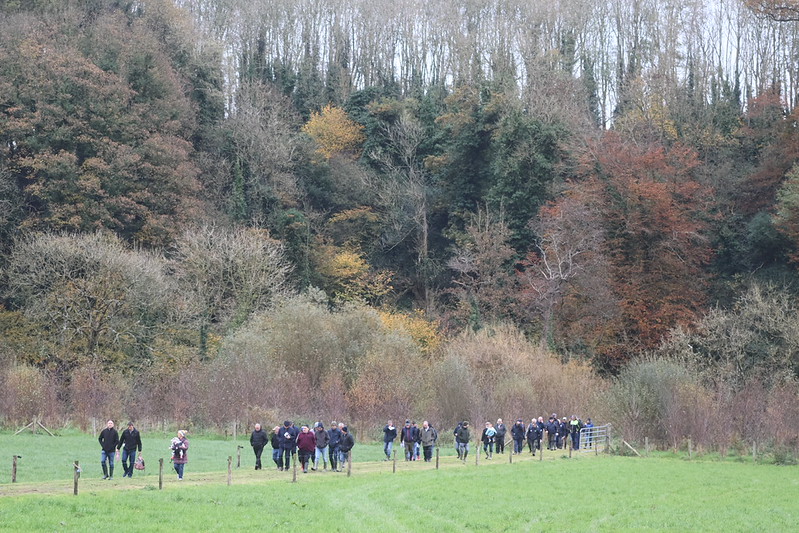
Waters of LIFE Woodland Generation Walk & Talk: Cork 2026
The benefits to tree planting are massive. They help water quality, habitat creation and biodiversity. They make rivers healthier. Waters of LIFE participants are also in a unique position because they put money back in your pocket while you’re doing the right thing.
That was the key takeaway from Waters of LIFE and Teagasc’s woodland walk and talk on November 5th 2026.
You’re also helping shape the next agri-environmental scheme to come by putting actions in the ground in a way that works for you.”
It was held on the woodland site of Teagasc’s Animal and Grassland Research and Innovation Centre in Moorepark, Co. Cork. 50 Waters of LIFE agri-environmental pilot participants were there on the day to learn about supports and incentives for tree planting on local farmland.
The group were guided through the site by an expert delivery team of scientists, advisors and foresters:
- Fergal Scully, Waters of LIFE Catchment Scientist
- Diarmuid McSweeney, Waters of LIFE Catchment Scientist
- Eimear Connery, Teagasc ASSAP Advisor
- Hazel Costigan, Teagasc Research Officer
- John Casey, Teagasc Forestry Development Officer
- Padraig O’Tuama, Registered Forester
- Paddy Purser, Registered Forester
The group visited four stops over 2 hours. Below is a summary of talking points, questions and answers. A select list of relevant quotes and resources are included.
Stop 1: Moorepark Overview
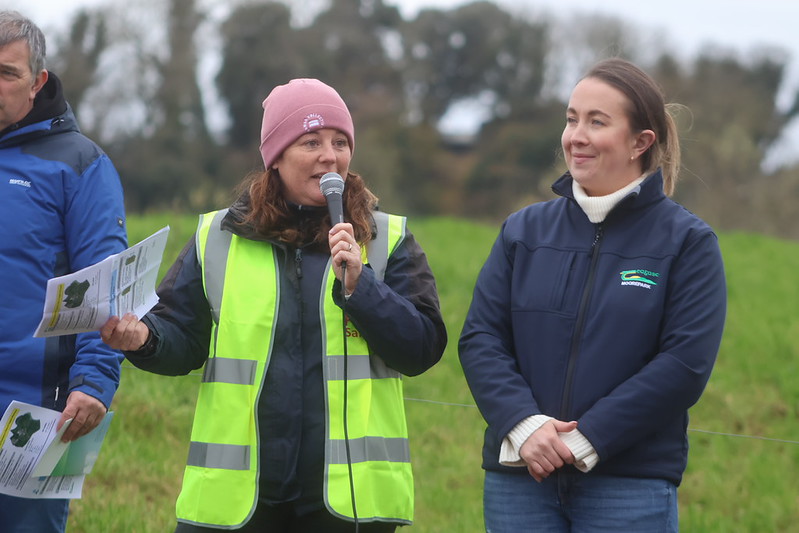
You know yourself where the water flows on your farm
Teagasc’ Hazel Costigan gave an overview of research into sustainable farming practises on the farm.
ASSAP advisor Eimear Connery explained how Pollution Impact Potential (PIP) maps helps with nutrient management. Teagasc planted 3ha of native trees on the farm in 2023. The woodland is situated along the Funchion River where is serves as a nutrient buffer on flood-prone heavy soils. The river flows into the Blackwater – a Special Area of Conservation because of the freshwater pearl mussel. It is a priority area of action for water quality.
Stop 2: Introduction to Tree Planting and Nature Value
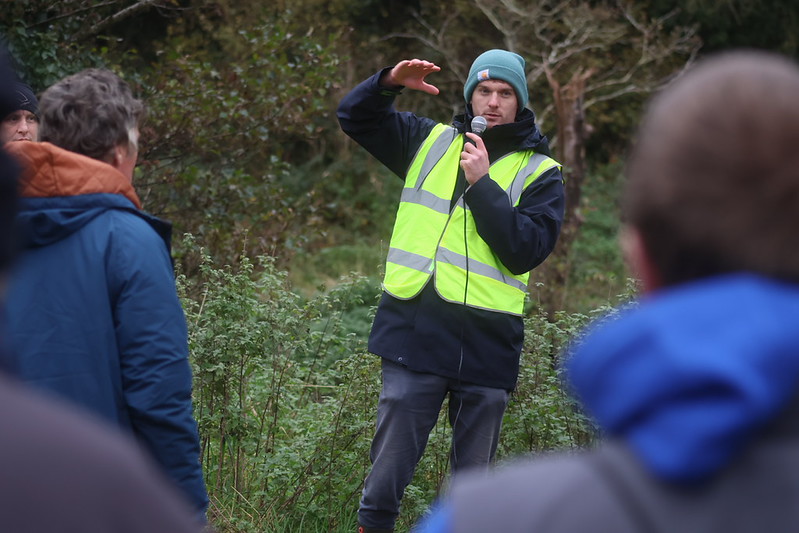
There’s space on everyone’s farm for at least 10 or 20 trees”
Planting trees on farms can help recover leached nutrients, stabilise river banks, increase soil infiltration rates, slow overland flow of water, and increase water retention. Catchment scientist Fergal Scully explained how the Waters of LIFE agri-environmental pilot funds tree planting at €16 per whip for farmers.
Fergal then spoke about how results-based payments for habitat assessment reward nature quality on farms. There are additional bonuses for nature based solutions in riverside areas. The size, variety and distribution of trees in a riverside area can add up to 40% of total habitat score.
The first question I ask a farmer: what do you want out of this?
Teagasc Forestry Advisor John Casey shared The ABC of planting trees as a helpful guide to individual tree planting. Teagasc Forestry offer helpful free advice and can be contacted here.
Stop 3: Forestry Schemes for Farms
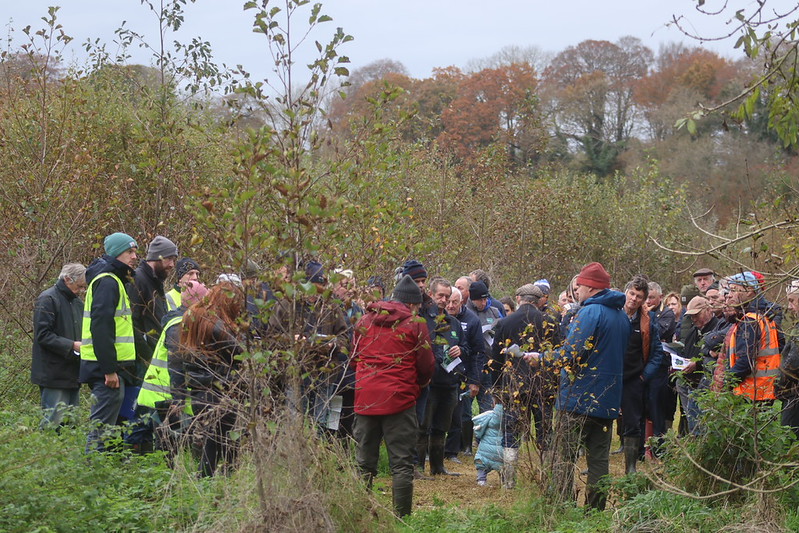
I’d advocate manual cleaning – going in with a hook and knocking the grass back”
Waters of LIFE work with a team of registered foresters who provide direct support to landowners within Waters of LIFE sub-catchments. Landowners receive free expert advice and administrative support in accessing government forestry schemes. Suitable candidates can also have the cost of fees covered by the project.
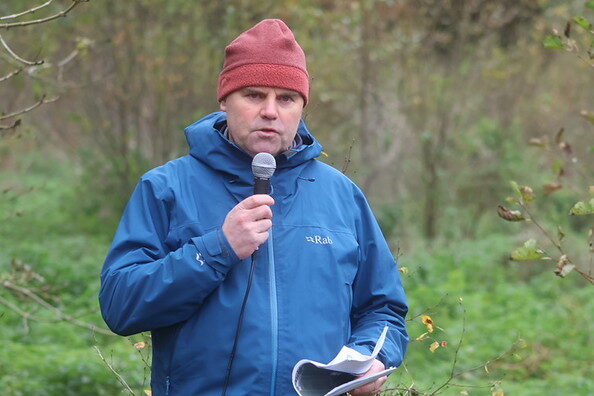
Registered forester Paddy Purser gave an outline of the NTA Scheme options for the creation of small native forests. These can be funded for both non-riverside and riverside farmland. Both options feature grants and annual premiums over a 10-year period. NTA scheme approval may only take 6 weeks.
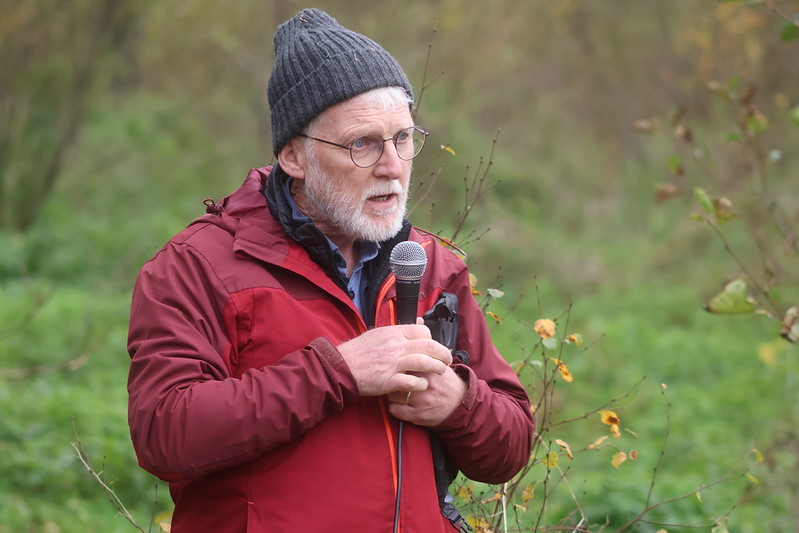
Padraig O’Tuama works with Paddy Purser on the Waters of LIFE Registered Forestry Team. He explained how the riverside woodland at Moorepark was designed using NTA 2 requirements:
- 20m width
- Trees planted with 3m x 3m spacing
- Planted using scrap mounding
- Integration of species for greater biodiversity
- Stockproof fencing
At a practical level, Padraig spoke about planting, protection and maintenance. He showed how inverted (scrap) mounding helps with minimising vegetation competition and spoke about how deer shelters (tubing) and increased spacing (5m x 5m) can offer more value for money than deer fencing. In the first year, grass growth can compete with tree growth in fertile soil. Padraig recommended grass cleaning – using hand tools to knock back grass. It’s not needed once the trees are above grass height.
Stop 4: Key Messages
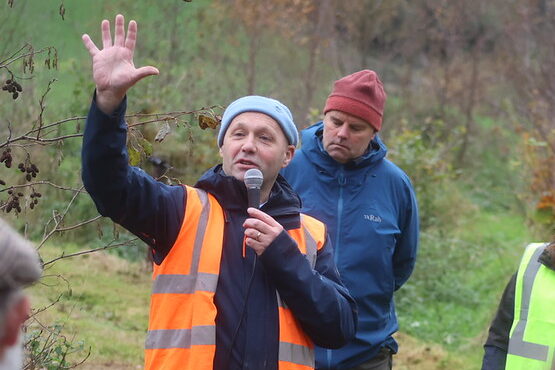
“We all want to leave the farm in a better place”
John Casey highlighted how trees can fit into the overall farming enterprise. Areas planted using NTA schemes area may continue to support direct payments where they satisfy eligibility rules for afforested land. John also spoke about putting the right tree in the right place with the right management to improve the legacy of the farm.
“The alder is a nurse to the oak”
Eimear, John, Paddy and Padraig spoke about how the woodland worked with the riparian margin that was subject to flooding. Alder and Willow are two examples of native trees more suited to flood plains. A forester can work with a farmer to agree on the most suitable species for a site. Paddy spoke about how trees in flood plains are much better at holding back sediment than grazed pasture in addition to their advantages for nutrient management.
Everything is a help. We want the trees soaking up the nutrients”
Eimear Connery reminded the group about the value of trees for water quality. EPA monitoring points above and below the woodland site may be able to track changes in phosphorous levels over time.
“The wider your riparian margins, the better you’ll score.”
In addition to her work as an ASSAP advisor for Teagasc, Eimear Connery also supports Waters of LIFE by working directly with programme participants. She observed that there is room for improvement on stock proofing and the width of margin between streams and fencing on participating farms. She reminded participants of the payments available for semi-natural riparian margins and the ambitions of the project to influence future policy.
Q&A
Waters of LIFE pilot farmers actively engaged throughout the event. Here are some of the questions they asked.
What about managing rabbits and deer?
There is a €7.00/m allowance for stock/rabbit fencing under the NTA scheme. Waters of LIFE also funds fencing and small sleeves can be provided to protect the trees.
If there is a serious localised problem, your registered forester can also plan to put in trees with a thicker stem that the rabbit can’t get through. In general though, rabbits don’t kill trees. They just eat the tops of them and on good ground, the trees can grow back quickly.
At the Teagasc Moorepark site, the return of buzzards in recent years has helped to manage the rabbit population.
What about trees getting diseases?
NTA, as an example, requires a minimum of four species of native tree. The mix will depend on your soil type. The beauty of having more than one species is that not all your eggs are in the same basket. Another species can take over.
There is a risk of disease with every crop. It’s the same with cereal or grass. Using certified trees produced in Irish nurseries lowers the risk.
The more tree species that you can fit into the ground, the better off you are. Teagasc are also undertaking doing research at the moment, and we’ve identified trees that are resistant to the disease.
If you have oak or ash already and you put whitethorn in, the whitethorn will grow faster. Would that not stifle growth?
It all depends on how you situate it. The plan you make with your registered forester will be unique to your site.
Can you use your own trees?
You’ll be planting certified trees that are that have come from the nursery. Trees you plant yourself won’t be part of the scheme. No.
What can you harvest out of what you plant?
The idea with these schemes is that they become a permanent feature. They act as a filtration system and create biodiversity. You’ll still need to thin the stand from time to time. That might give you a bit of firewood every year. But you could also shape a number of trees and develop them for one-off high quality timber. It’s possible. But it’s not the main objective.
Aren’t riparian zones supposed to be left alone?
With the NTA 2 Scheme (creation of small native forests for water protection), you can’t plant trees within 2m of the water and you’ll also need a 10m set back. You can plant up to 20% of that area to help with food and shading for aquatic life as well as bank stabilisation. Otherwise it should be left undisturbed. You might need to manage it for invasive species but if you clear shrub, the area won’t be eligible for inclusion in the scheme. It’s all accounted for in the grant funding. The set back will naturally generate vegetation based on the soil type to help break the pathway for pollutants.
The specification is different for planting of individual trees with Waters of LIFE. You can talk to your catchment scientist about it.
What about invasive plants?
You are expected to monitor for invasive species under NTA 1 and NTA 2. Some management requires specialist training and procedures. Invasive Species Control is a funded action under Waters of LIFE. Talk to your catchment scientist about your options if you see invasive species on your farmland.
You mentioned controlling nitrates, phosphates and sediment. What about potassium?
The Nitrates Regulations only cover nitrogen and phosphorous. Potassium levels are recorded but aren’t generally seen an issue for surface water bodies.